STM32F745IET7

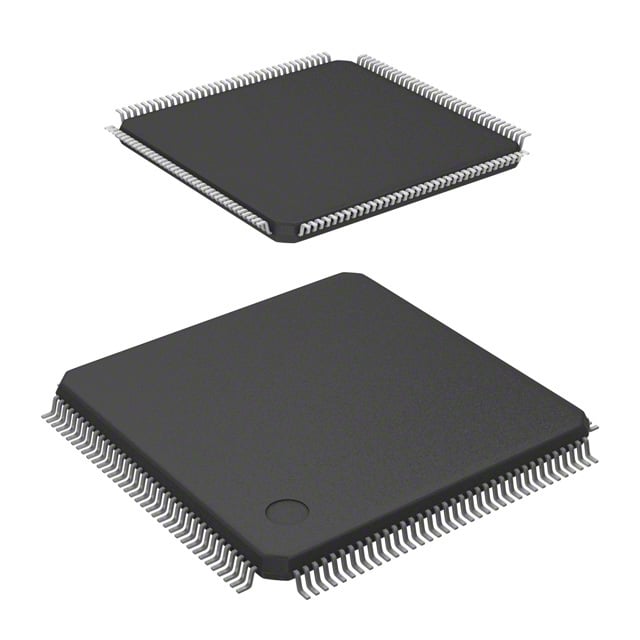
Active - IC MCU 32BIT 512KB FLASH 176LQFP
Description:
IC MCU 32BIT 512KB FLASH 176LQFP
STM32F745IET7 Specification
Product Attribute
Attribute Value
Core Processor
ARM? Cortex?-M7
Core Size
32-Bit Single-Core
Connectivity
CANbus, EBI/EMI, Ethernet, I2C, IrDA, LINbus, SAI, SD, SPDIF-Rx, SPI, UART/USART, USB OTG
Peripherals
Brown-out Detect/Reset, DMA, I2S, POR, PWM, WDT
Program Memory Size
512KB (512K x 8)
Program Memory Type
FLASH
Voltage - Supply (Vcc/Vdd)
1.7V ~ 3.6V
Data Converters
A/D 24x12b; D/A 2x12b
Operating Temperature
-40 ℃ ~ 105 ℃ (TA)
Mounting Type
Surface Mount
Supplier Device Package
176-LQFP (24x24)
STM32F745IET7 Description
STMicroelectronics STM32F745IET7 Detailed Overview
The STM32F745IET7 is a high-performance 32-bit microcontroller developed by STMicroelectronics as part of the STM32F7 series. Based on the ARM® Cortex®-M7 core, it is designed for applications requiring exceptional computational performance, advanced peripheral integration, and low power consumption. With digital signal processing (DSP) capabilities, a floating-point unit (FPU), and rich interface support, the STM32F745IET7 targets demanding embedded systems across industrial, medical, consumer, and IoT domains.
Core Architecture
The STM32F745IET7 is powered by an ARM Cortex-M7 core—the most powerful core in the ARM Cortex-M family—delivering superior performance with low dynamic power. It incorporates a six-stage superscalar pipeline, dynamic branch prediction, and tightly coupled memories for real-time responsiveness.
* Core: ARM Cortex-M7 (32-bit RISC)
* Maximum Clock Frequency: 216 MHz
* CoreMark Score: Over 1000 CoreMarks at 216 MHz
* Floating-Point Unit: Single-precision IEEE 754 compliant
* Instruction Set: Thumb-2
* DSP Instructions: Yes, optimized for signal processing and control
Memory Architecture
The STM32F745IET7 provides generous and flexible memory resources to support complex embedded applications.
* Flash Memory: 1 MB
* SRAM:
– 320 KB total SRAM (divided into blocks of 240 KB main SRAM and 16 KB each of DTCM, ITCM, and auxiliary SRAM)
* External Memory Interface:
– Flexible Memory Controller (FMC) supports SRAM, PSRAM, NOR, NAND
– Quad-SPI interface for external flash with memory-mapped execution
* EEPROM Emulation: Supported in Flash via ST software libraries
Power Management
Optimized for energy efficiency, the STM32F745IET7 includes dynamic voltage scaling, low-power modes, and power-down features for peripherals and the core.
* Supply Voltage: 1.7 V to 3.6 V (I/Os are 5 V tolerant on some pins)
* Power Consumption:
– Typical Run Mode: ~200 µA/MHz at 3.3 V
– Stop Mode: ~100 µA
– Standby Mode: ~4 µA
* Integrated Brown-Out Reset and Power-on Reset circuitry
Clock System
* Internal Oscillators:
– 16 MHz HSI (High-Speed Internal)
– 32 kHz LSI (Low-Speed Internal)
* External Oscillators:
– 4–26 MHz HSE (High-Speed External)
– 32.768 kHz LSE (Low-Speed External)
* Phase-Locked Loop (PLL): Multiple PLLs for system, USB, and peripherals
* Clock Security System: Ensures safe clock source transitions
Advanced Connectivity Interfaces
The STM32F745IET7 integrates a broad set of communication peripherals designed to interface with a wide range of external devices and networks.
* USB:
– Full-speed and High-speed USB OTG (On-The-Go)
– Device and Host functionality
* Ethernet MAC:
– IEEE 802.3 compliant
– Supports MII and RMII
– Integrated DMA and checksum offload
* CAN: 2 × CAN 2.0B active interfaces
* UART/USART: 4 × USARTs and 4 × UARTs, with features like LIN, IrDA, Smartcard
* SPI: 6 × SPI interfaces (up to 50 MHz), supporting master/slave modes
* I²C: 3 × I²C interfaces with SMBus/PMBus support
* SDIO: SD/MMC card interface
* Quad-SPI: Up to 4-bit parallel interface for external memory execution
* SAI (Serial Audio Interface): 2 × SAI blocks for I²S, TDM, and audio streaming
* I²S (via SPI): Dedicated audio data transfer support
* LCD-TFT Controller: Interfaces directly with TFT displays (up to XGA resolution)
Timers and PWM
* Advanced-Control Timer: 1 × 16-bit for motor control and advanced PWM
* General-Purpose Timers: 10 × 16-bit or 32-bit timers with capture/compare
* Low-Power Timer: 2 × ultra-low power timers for wake-up and timekeeping
* Watchdog Timers: Independent and Window Watchdog timers
* SysTick Timer: 24-bit for real-time OS tick generation
Analog Features
* ADC:
– 3 × 12-bit ADCs
– Up to 2.4 MSPS sampling rate
– Up to 24 channels (including internal temperature sensor and Vrefint)
* DAC:
– 2 × 12-bit DACs for waveform generation
* Operational Amplifier and Comparators: Not included on this variant
Security and Integrity
* CRC Calculation Unit: 32-bit, hardware-accelerated
* True Random Number Generator (TRNG): Based on analog noise source
* Memory Protection Unit (MPU): Supports privilege and access control
* Hardware Semaphore: Useful in multi-core or RTOS environments
* Flash Security: Read-out protection, write protection, and option bytes
Debug and Development
* Debug Interfaces:
– SWD (Serial Wire Debug)
– JTAG
– Embedded Trace Macrocell (ETM) for real-time tracing
* On-Chip Debugging: Hardware breakpoints, watchpoints, data tracing
* Programming Interfaces: UART, USB DFU, or SWD/JTAG
* Development Support:
– STM32CubeF7 firmware package
– STM32CubeMX for configuration and code generation
– Support for major IDEs like STM32CubeIDE, Keil MDK, and IAR EWARM
Mechanical and Environmental
* Package Type: LQFP-176 (Low-profile Quad Flat Package)
* Package Pitch: 0.4 mm
* Package Body Size: 24 × 24 mm
* Temperature Range: –40°C to +85°C (industrial)
* ESD Protection: High immunity I/Os with robust internal protection
* RoHS Compliance: Yes
Typical Applications
* Industrial Automation Controllers
* Motor Control Systems
* Medical Devices
* Audio Processing Equipment
* Human-Machine Interfaces (HMI)
* High-End Consumer Electronics
* IoT Gateways and Edge Devices
Conclusion
The STM32F745IET7 is a feature-rich microcontroller that offers a high-performance Cortex-M7 core, extensive memory, advanced digital and analog peripherals, and diverse connectivity options. Designed for performance-hungry and real-time applications, it combines raw processing capability with low power operation and high integration. Its built-in graphics, audio, Ethernet, and USB support make it ideal for complex, connected systems requiring precise control, rich user interfaces, and reliable communication. The device is well supported by ST’s comprehensive development tools and software ecosystem, making it a strong choice for advanced embedded designs.


 Netherlands