STM32F301K6U7

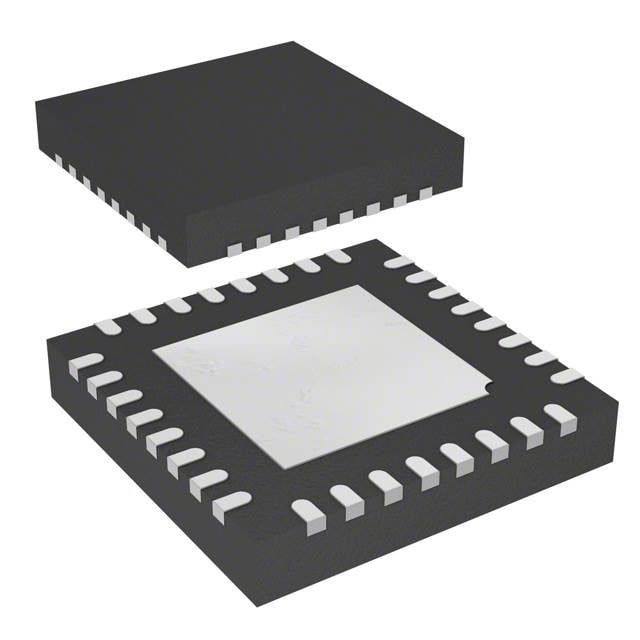
Active - IC MCU 32BIT 32KB FLASH 32UFQFPN
Description:
IC MCU 32BIT 32KB FLASH 32UFQFPN
STM32F301K6U7 Specification
Product Attribute
Attribute Value
Core Processor
ARM? Cortex?-M4
Core Size
32-Bit Single-Core
Connectivity
I2C, IrDA, LINbus, SPI, UART/USART
Peripherals
DMA, I2S, POR, PWM, WDT
Program Memory Size
32KB (32K x 8)
Program Memory Type
FLASH
Voltage - Supply (Vcc/Vdd)
2V ~ 3.6V
Data Converters
A/D 11x12b; D/A 1x12b
Operating Temperature
-40 ℃ ~ 105 ℃ (TA)
Mounting Type
Surface Mount
Package / Case
32-UFQFN Exposed Pad
Supplier Device Package
32-UFQFPN (5x5)
STM32F301K6U7 Description
Overview
The STMicroelectronics STM32F301K6U7 is a high-performance 32-bit microcontroller from the STM32 F3 series, based on the ARM Cortex-M4 core with Floating Point Unit (FPU) and DSP extensions. It is designed for mixed-signal applications that demand both precise analog functionality and efficient digital computation. This device is suitable for motor control, industrial automation, sensor interfacing, power management, and other embedded applications requiring real-time control and high-accuracy analog processing.
Core and Performance
The STM32F301K6U7 features an ARM Cortex-M4 core operating at up to 72 MHz. The integrated FPU accelerates floating-point arithmetic, which is critical for applications such as motor control algorithms, sensor fusion, and digital signal processing. The core architecture includes a three-stage pipeline, Harvard architecture for separate instruction and data buses, and deterministic interrupt handling to ensure predictable real-time performance. It delivers high computational efficiency while maintaining low latency for critical tasks.
Memory Architecture
The microcontroller integrates 32 KB of Flash memory for program storage and 8 KB of SRAM for data operations. The Flash memory provides reliable non-volatile storage for firmware, calibration data, and configuration parameters, while SRAM supports stack operations, buffer management, and real-time data processing. The memory system is optimized for fast access to allow the Cortex-M4 core to perform computational tasks without bottlenecks.
Analog and Mixed-Signal Features
The STM32F301K6U7 provides advanced analog peripherals, including a 12-bit ADC with up to 16 channels for precise analog signal acquisition. A 12-bit DAC allows accurate analog output generation, suitable for motor control, audio, or sensor signal generation. Integrated operational amplifiers and comparators enable analog signal conditioning, threshold detection, and sensor interfacing without requiring external components, reducing board complexity.
Timers and PWM Control
The device features multiple 16-bit timers and advanced control timers capable of generating precise PWM signals. These timers support input capture, output compare, event counting, and microsecond-level timing resolution. High-resolution timers enable accurate control of motors, power electronics, and other timing-critical systems, ensuring deterministic performance in embedded applications.
Communication Interfaces
The STM32F301K6U7 offers multiple communication interfaces including USART, SPI, and I2C. These peripherals enable connectivity with sensors, memory devices, displays, and industrial control modules. The microcontroller supports DMA transfers for efficient data movement between peripherals and memory without burdening the CPU, improving system performance and real-time responsiveness.
Input/Output Features
The microcontroller provides up to 37 GPIO pins, configurable as digital inputs, outputs, or alternate peripheral functions. GPIOs can operate in push-pull or open-drain modes with optional pull-up or pull-down resistors. Many pins are multifunctional, enabling assignments to ADC channels, DAC outputs, timers, or communication interfaces, offering flexibility for embedded system designs.
Clock System and Power Management
The STM32F301K6U7 operates with a supply voltage range of 2.0 V to 3.6 V and features a flexible clock system that supports internal and external oscillators, PLLs, and prescalers for precise timing. The microcontroller supports multiple low-power modes, including Sleep, Stop, and Standby, allowing designers to optimize energy consumption for battery-powered or energy-sensitive applications. Clock frequency scaling can dynamically adjust performance and power usage.
Security and Reliability
The device includes an independent watchdog timer and a windowed watchdog timer for system reliability. Brownout detection and voltage monitoring ensure stable operation under varying supply conditions. Flash memory protection and deterministic Cortex-M4 execution guarantee program integrity and predictable timing for critical applications.
Package and Physical Characteristics
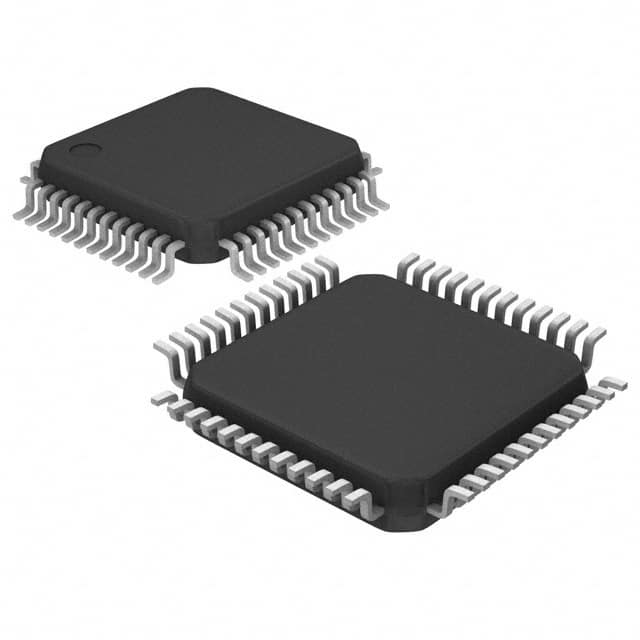
The STM32F301K6U7 is available in a 32-pin UFQFPN package, offering a compact footprint for space-constrained applications while maintaining sufficient I/O access. The microcontroller operates over a commercial temperature range of 0°C to 70°C, suitable for both industrial and consumer applications.
Key Specifications
* Core: ARM Cortex-M4 with FPU and DSP, 32-bit, up to 72 MHz
* Flash Memory: 32 KB
* SRAM: 8 KB
* ADC: 12-bit, up to 16 channels
* DAC: 12-bit, single channel
* GPIO: Up to 37 pins, configurable with alternate functions
* Communication Interfaces: USART, SPI, I2C
* Timers: Multiple 16-bit and advanced control timers with PWM capability
* Power Supply: 2.0 V – 3.6 V
* Operating Temperature: 0°C to 70°C
* Package: 32-pin UFQFPN
* Low-Power Modes: Sleep, Stop, Standby
* Watchdog: Independent and windowed
* Analog Features: Integrated operational amplifiers and comparators
Summary
The STM32F301K6U7 is a versatile and high-performance microcontroller optimized for mixed-signal embedded applications. Its ARM Cortex-M4 core with FPU and DSP extensions provides efficient real-time processing, while integrated ADCs, DAC, operational amplifiers, and comparators support precise analog signal acquisition and control. Coupled with multiple timers, flexible GPIOs, communication interfaces, and low-power operation, the device is ideal for motor control, industrial automation, sensor interfacing, and other applications requiring precision, speed, and reliability in a compact form factor.



 Germany